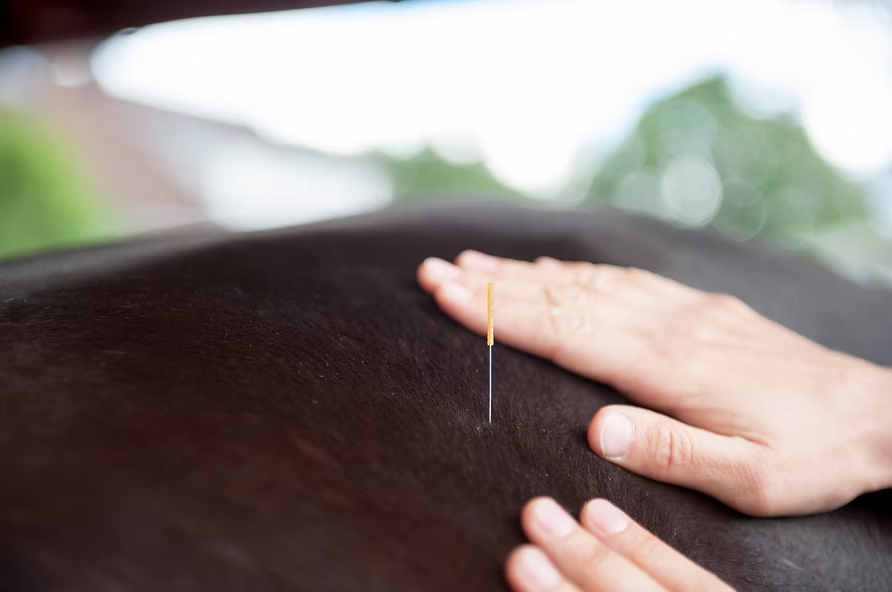
Acupuncture needle placed in a horse’s back.

Acupuncture

Acupuncture

How acupuncture is understood in Traditional Chinese Medicine and in modern science.

Overview

Acupuncture builds a bridge between traditional concepts and modern physiology. The four sections below describe how acupuncture is explained in Traditional Chinese Medicine, how current research understands its effects – and how far back in history similar ideas can be traced.

In simple terms

Acupuncture in Simple Terms

Put simply, acupuncture stimulates specific points on the body that can influence biochemical and physiological processes. Rather than forcing change from the outside, it activates the body’s own healing system so that pain, tension and functional disturbances can normalise themselves. In both animals and humans this means treatment can support recovery instead of just masking symptoms.
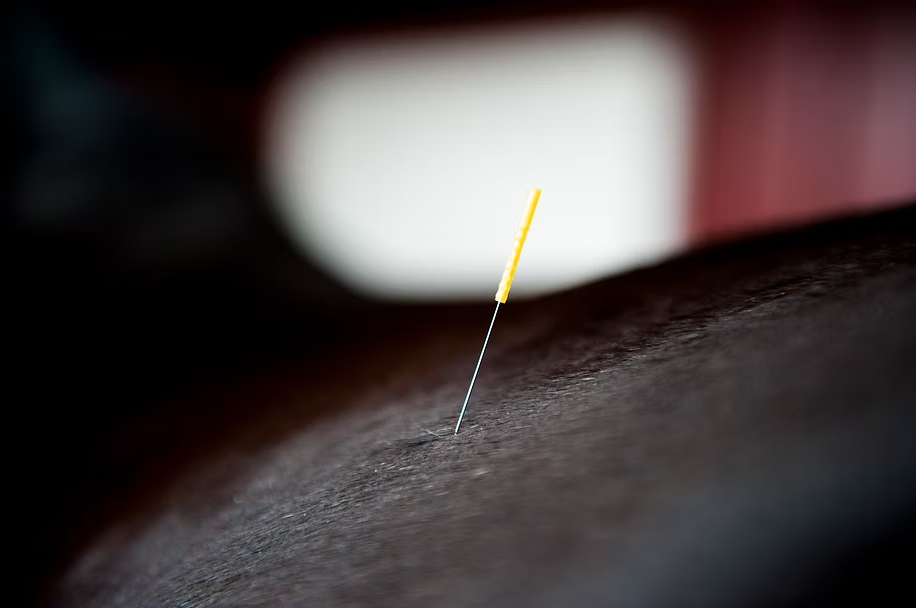
Close-up of an acupuncture needle on a horse’s back.

Traditional Chinese Medicine

Acupuncture as Part of Traditional Chinese Medicine

In Traditional Chinese Medicine (TCM), good health is based on a balance between the forces of Yin and Yang – opposites such as day and night, cold and warmth, youth and age. This balance is expressed through the flow of life energy, Qi, in channels called meridians that run throughout the body. When Qi flows freely, the organism is considered healthy; when the flow is blocked or weakened, physical or emotional symptoms can appear. Stress, overexertion, trauma, poor diet or external influences such as cold and damp can all disturb this balance. By stimulating carefully selected acupuncture points, the flow of Qi can be regulated again, helping to prevent or ease disease.

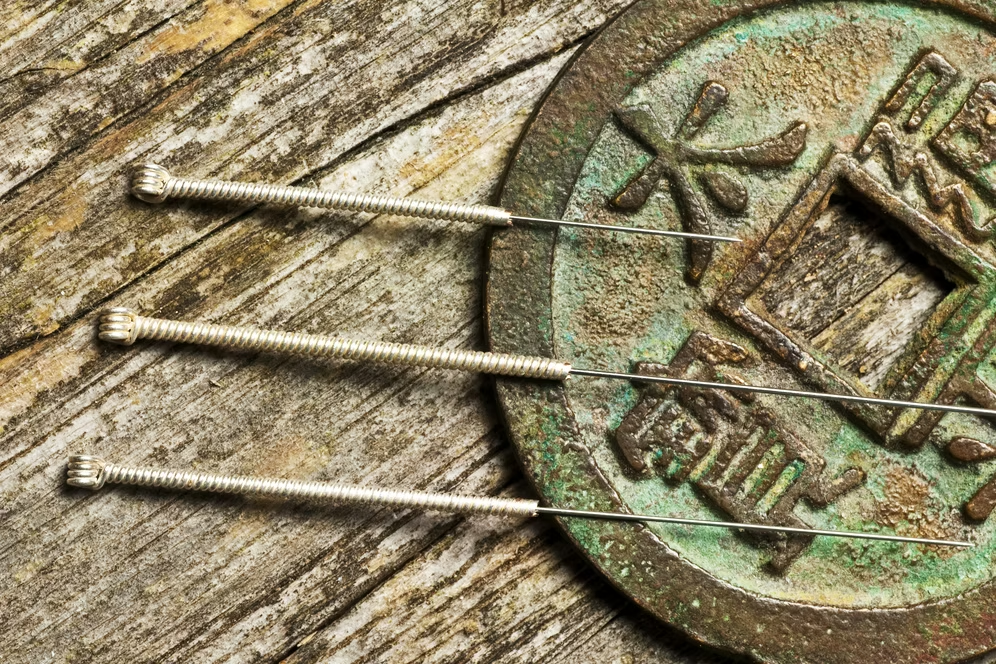
Traditional Chinese coin with acupuncture needles.

Modern science

Acupuncture in Modern Science

Early Chinese practitioners mainly described what they observed and were less concerned with anatomical explanations. Modern research has added new perspectives. Since the 1950s we know that skin at acupuncture points can be up to a thousand times more electrically conductive than the surrounding skin, and that many points lie close to nerves, blood vessels and fascial planes. Needle stimulation activates nerve fibres in the skin and muscles; impulses travel to the spinal cord and brain and can influence circulation, pain processing and even immune cells around the nerves. In this way acupuncture does more than relieve pain – it can support the body’s defence system, increase blood flow, release natural pain-relieving substances and relax muscle tension, helping to harmonise disturbed functions without “replacing” damaged structures.

Hand placing acupuncture needles along a horse’s back.

Historical perspective

Acupuncture and the Iceman Ötzi

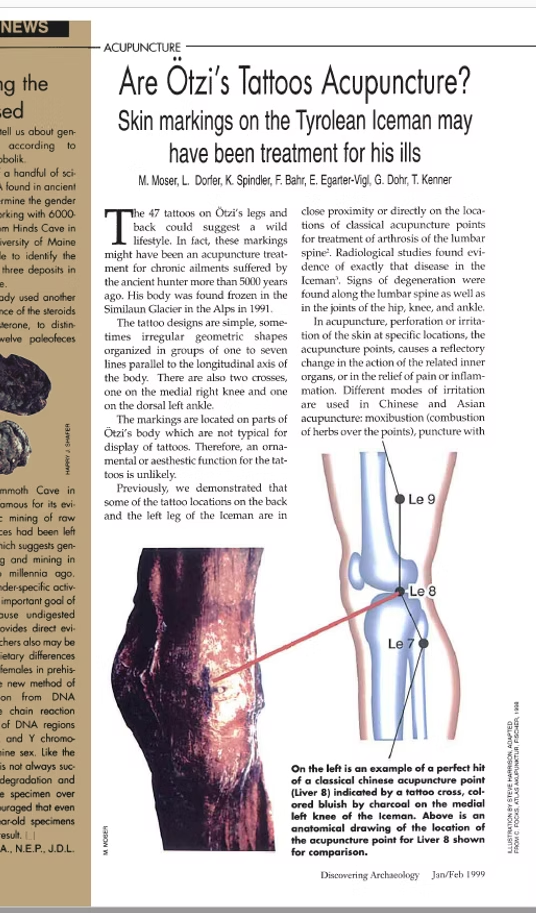
The Stone Age mummy Ötzi, discovered in South Tyrol in 1991, carries a series of small tattoos that appear to mark an early form of acupuncture more than 5,000 years old. Many of the tattooed locations correspond to points still used today to treat osteoarthritis of the spine, hip and knee – diagnoses that were later confirmed by X-ray. Intestinal parasites were also found, and some tattoos lie along points that support the digestive system. Taken together, this suggests that a medical system very similar to Chinese acupuncture may have developed independently among Europe’s prehistoric population – an expression of a deep, intuitive understanding of body and disease. A fascinating historical parallel to what we now call acupuncture.

Article about Ötzi and possible acupuncture tattoos.